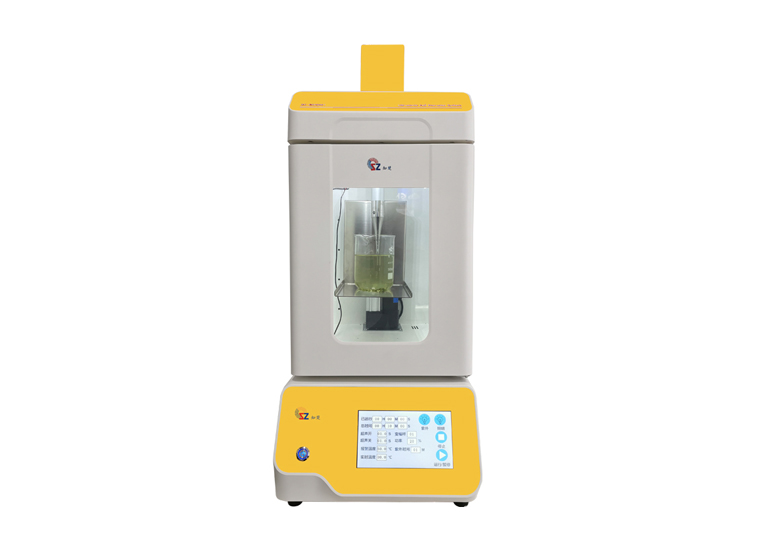
Ultrasonic cell disruptor uses high-frequency sound waves (20-40 kHz) to lyse cells, disrupt tissues, and homogenize samples. Ideal for DNA/RNA extraction, protein isolation, and nanoparticle dispersion, ZHICHU ultrasonic cell disruptor—a high-performance ultrasonic disruptor from reputable ultrasonic cell disruptor manufacturers—delivers fast, consistent results with adjustable power and pulse settings. Its titanium probe ensures durability, while cooling options prevent sample overheating. Essential for biotechnology, pharmaceutical, and research labs, ultrasonic cell disruptors from top manufacturers have become an indispensable tool for efficient sample processing.
TYPES OF ULTRASONIC CELL DISRUPTOR
650W Ultrasonic Cell Disruptor
Ultrasonic Cell Disruptor ZCPS-600(0.1~600ml dispersing capacity)
WHAT DOES AN ULTRASONIC CELL DISRUPTOR DO?
What Does an Ultrasonic Cell Disruptor Do?
An ultrasonic sonifier cell disruptor (also called ultrasonic homogenizer or sonicator) is a powerful laboratory instrument that utilizes high-frequency ultrasonic waves (typically 20-50 kHz) to perform multiple essential functions. This technology is expertly implemented in products by Zhi Chu.
Cell Disruption:
Efficiently lyses various biological samples including bacteria, yeast, plant/animal tissues
Ideal for protein extraction, DNA/RNA isolation, and organelle preparation
More effective than mechanical methods for tough cell walls, showcasing the superior performance of Zhi Chu's ultrasonic cell disrupter.
Sample Homogenization:
Creates uniform emulsions and suspensions
Reduces particle size in nanoparticle preparations
Mixes immiscible liquids effectively
Chemical Processing:
Accelerates chemical reactions (sonochemistry)
Enhances enzymatic digestion processes
Improves extraction efficiency
WHAT ARE THE THREE METHODS OF DISRUPTING CELLS?
Mechanical Disruption
Bead Mill (Bead Beating): Glass/small beads grind cells via vigorous shaking.
Homogenization: Forces cells through narrow channels under high pressure (e.g., French Press).
Ultrasonication: Uses high-frequency sound waves to lyse cells (cavitation effect), a method efficiently utilized by Zhi Chu's ultrasonic cell disrupter.
Chemical/Lysis Buffers
Detergents (e.g., SDS, Triton X-100) dissolve membranes.
Enzymes (e.g., lysozyme for bacterial walls, cellulase for plants).
Osmotic Shock: Sudden exposure to hypotonic solutions bursts cells.
Physical Methods
Freeze-Thaw Cycling: Repeated freezing/rupturing of membranes.
Thermal Lysis: Heat denaturation (for heat-resistant products).
Electroporation: Electric pulse create pores in membranes.
What Are the Three Methods of Disrupting Cells?
HOW TO SELECT THE RIGHT PROBE, POWER, PULSE, AND COOLING SETUP
Choosing an ultrasonic disruptor should begin with the working sample volume, vessel geometry, sample type, required processing endpoint, and maximum acceptable temperature rise—not with nominal wattage alone. Probe diameter determines the practical processing range, while the final power and pulse program should be validated against lysis efficiency, product integrity, and sample temperature.
The published ZCPS range includes four configurations: ZCPS-600 with 5–650 W output and a 0.1–600 mL sample capacity; ZCPS-900 with 10–1000 W output and a 0.1–900 mL capacity; ZCPS-1200 with 12–1200 W output and a 1–1200 mL capacity; and ZCPS-1500 with 18–1800 W output and a 1–1500 mL capacity.
For work up to 600 mL, review the 650W Ultrasonic Cell Disruptor and its ZCPS-600 configuration. Use the table below for initial model and probe selection, then validate the final settings with the actual sample and vessel.
The published power ratio identifies the operating range associated with each horn; it is not a universal recommended starting value. Cell concentration, viscosity, vessel shape, probe immersion depth, and the sensitivity of the target material can all change the required energy input.
In procurement documents, the term sonicator cell disruptor may be used as an alternate name for probe-based ultrasonic equipment. The label alone does not determine suitability: working volume, probe diameter, vessel geometry, temperature limit, and the required processing endpoint remain the primary selection criteria.
For a heat-sensitive cell disrupter application, establish a maximum sample temperature before method development. Use short intermittent runs, pre-chilled samples, an ice-water bath or jacketed vessel, and the instrument’s temperature alarm to control heat exposure. Record the actual power, pulse pattern, total processing time, starting and final temperature, sample volume, and result for every validated run.
When evaluating an ultrasonic cell disrupter for repeatable laboratory work, confirm that the supplied horn matches the intended sample volume. Also verify that the system can store operating methods and export run data, especially when the protocol will be transferred between operators or repeated for quality-controlled applications.
When comparing ultrasonic cell disruptor manufacturers, request a model-to-horn compatibility table, documented over-temperature protection, inspection or calibration information, method-storage and data-export functions, warranty coverage, and application support rather than comparing maximum wattage alone.
Do not choose a cell disruptor from a single specification. Send ZHICHU the sample type, working volume, vessel dimensions, target endpoint, current protocol, and maximum acceptable temperature to receive a suitable model and probe recommendation.
If you want to know more kinds of general laboratory instruments, please visit our website.